Hello, visitor👋
Dashboard
My projects
Denys Trokhymchuk
UI\UX Designer

Period
2022 - 2025
Business model
B2B
My role
Marketing UI\UX Designer
Team
Marketing
Landing for PPC
Main page
Meta and Google ADS
Other
What's been done
✅
I redesigned the PPC landing page, which resulted in a 4x increase in click conversion
✅
I redesigned the “Book a Demo” page, resulting in a 3x increase in demo form conversions
Context
The main objective was to analyze the existing PPC landing page and increase conversion. After implementing the new design, we significantly improved click-through conversions on the “Book a Demo” CTA
Based on performance data, we also decided to redesign the “Book a Demo” page to improve the more business-critical conversion and increase overall funnel efficiency
Work stages
Analysis of the previous version
Using Microsoft Clarity and Google Analytics, we identified clear optimization opportunities to improve landing page conversion. We reviewed Scroll Maps and Click Maps, analyzed session recordings, and validated insights against performance metrics across multiple time periods. This data-driven analysis guided the redesign decisions and improved the page’s conversion flow
Research
I analyzed competitor B2B SaaS pages and identified effective patterns: a step-by-step structure, clean design, and a clear emphasis on the product’s value
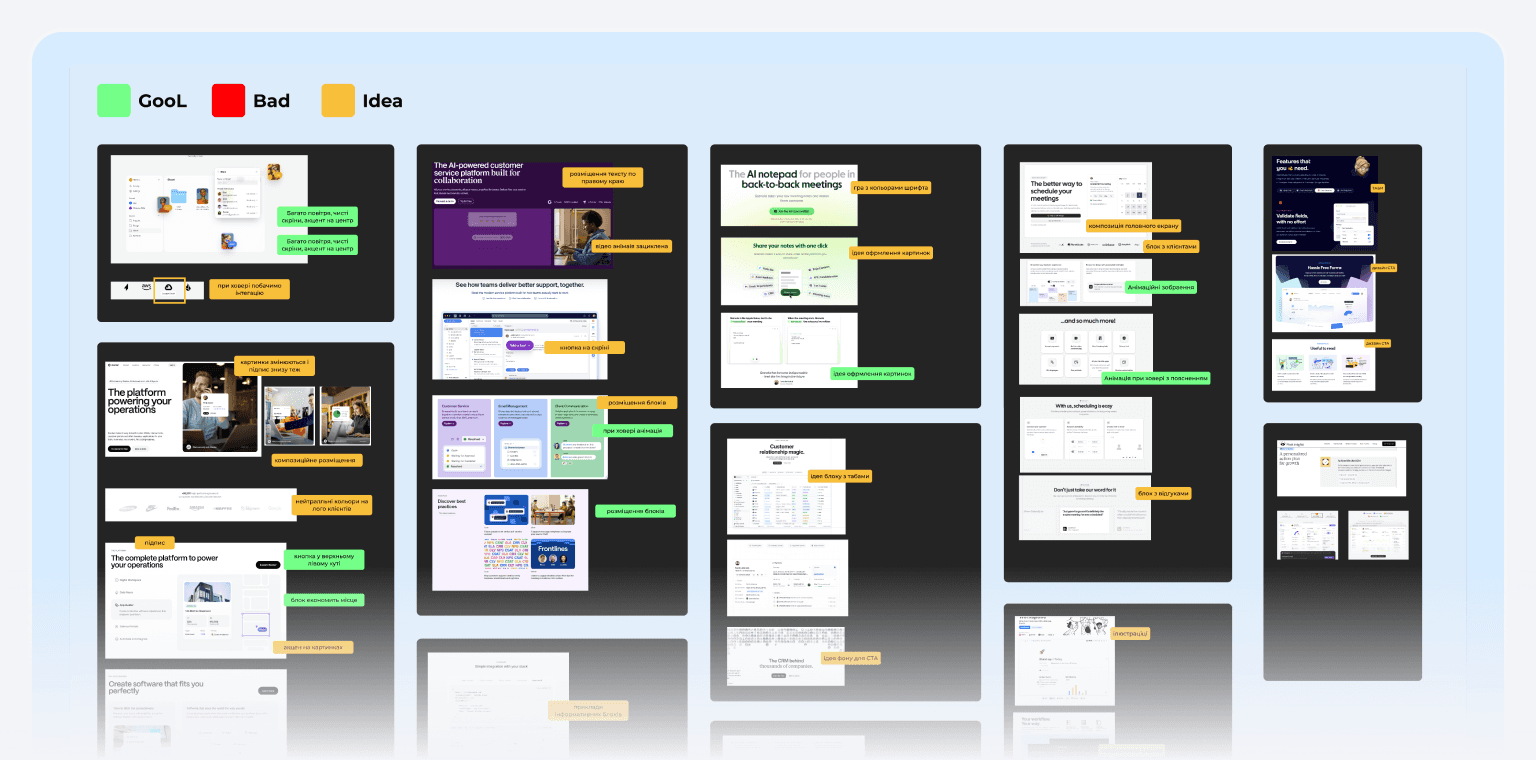
Moodboard and defined hypotheses
Initial prototypes
We had a team call where I presented my prototype solutions and defined the key hypotheses
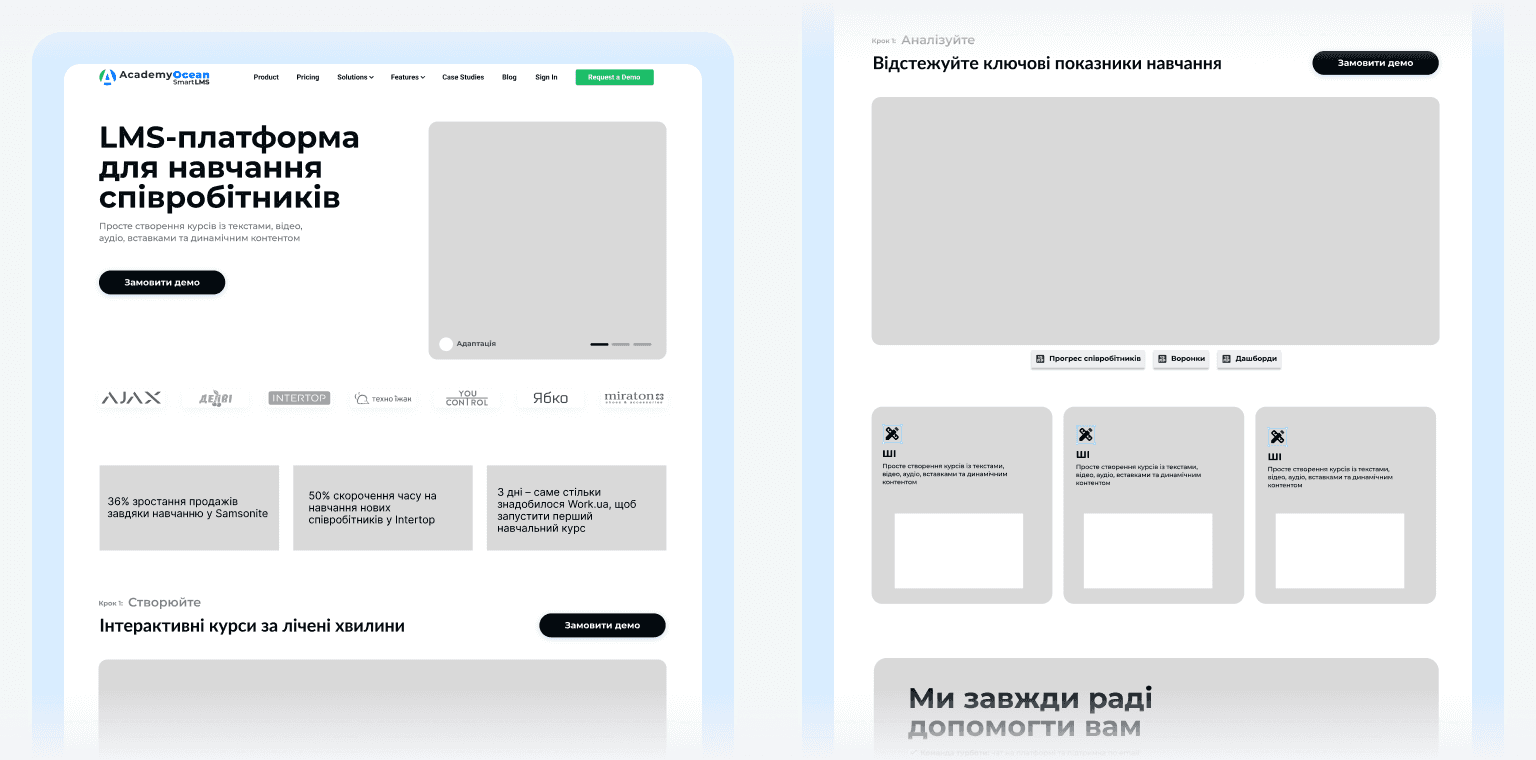
Prototype
Design
A key decision was to highlight not only the platform itself, but also the results achieved by companies that chose our product
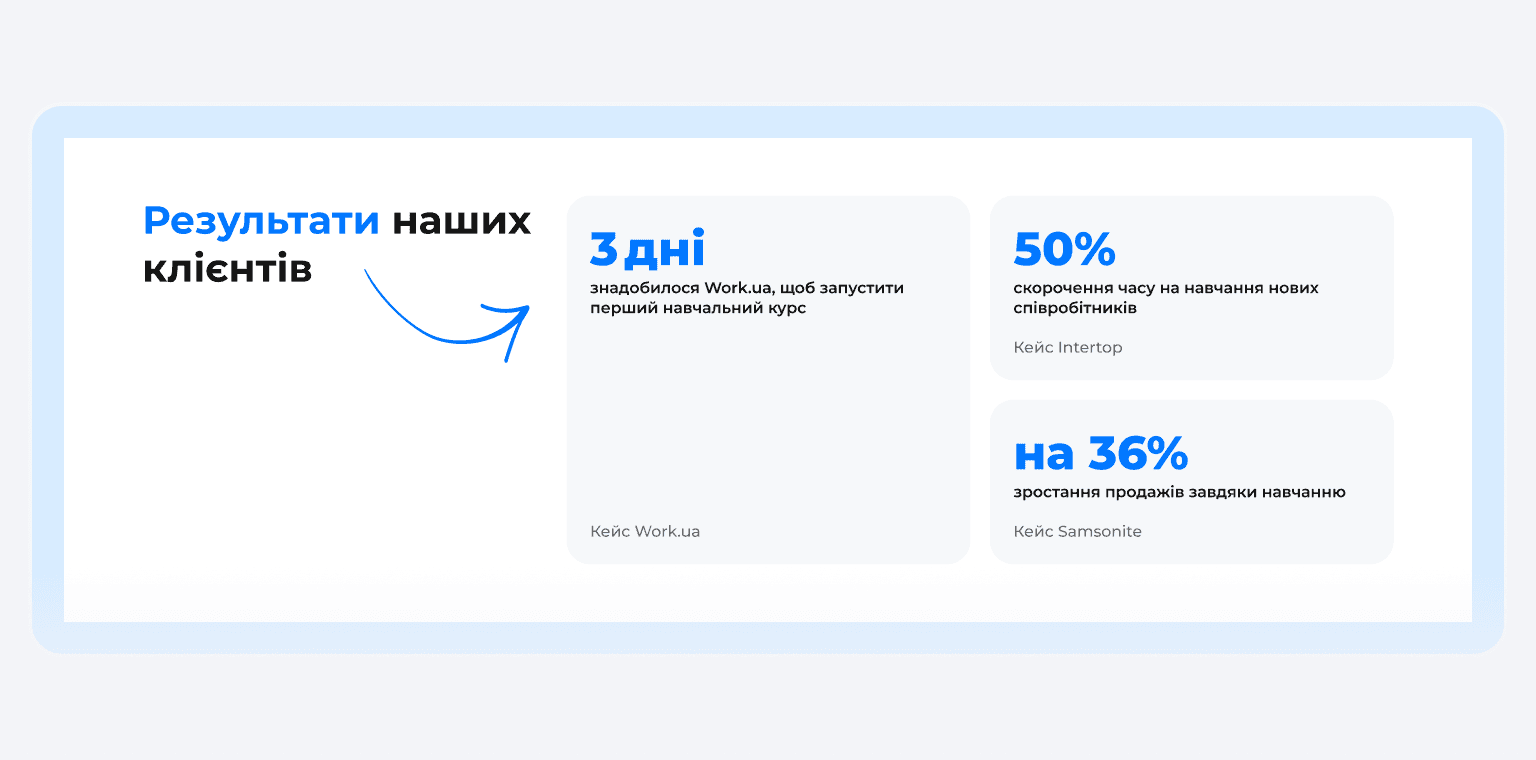
Results block
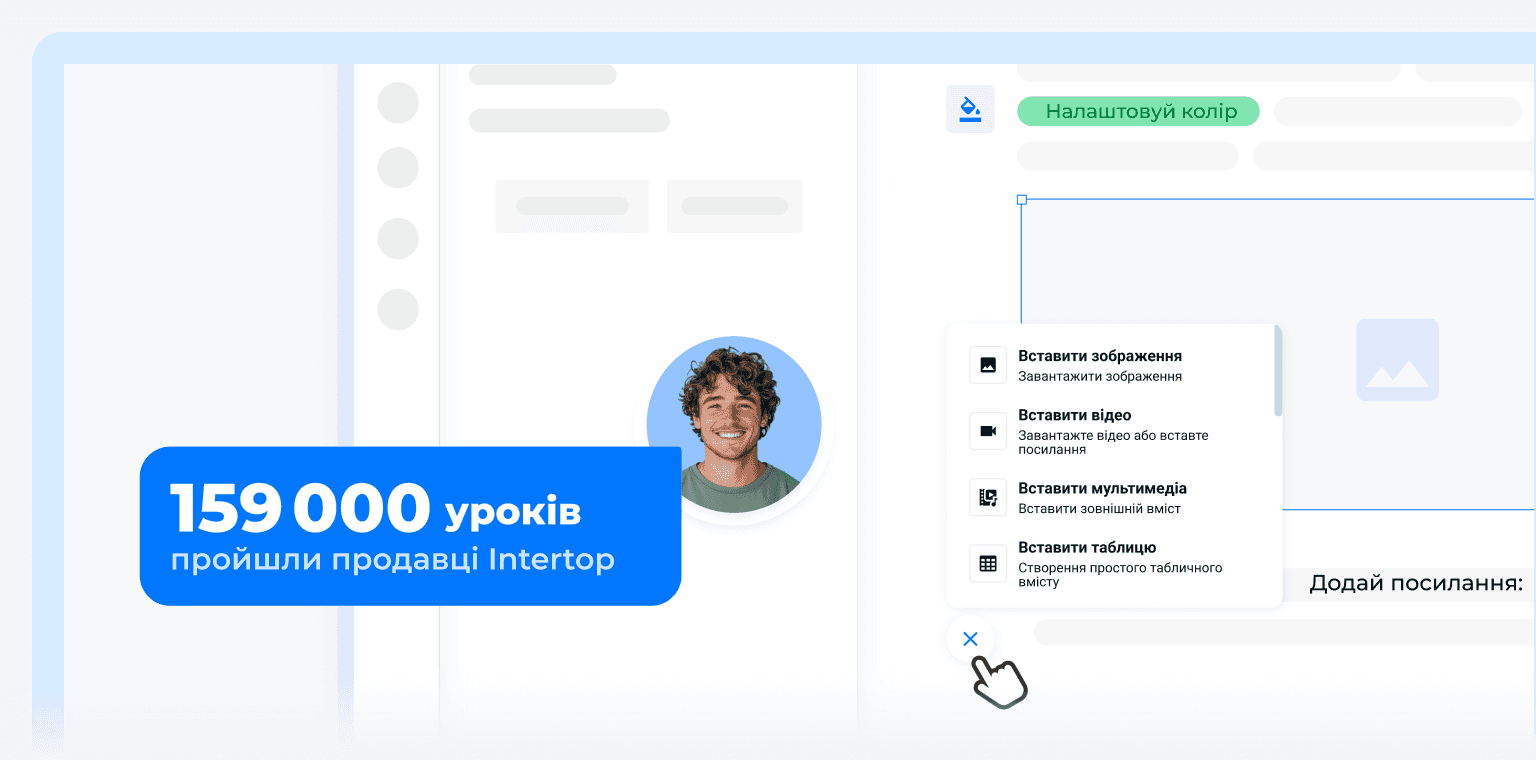
Avatars integrated into the sections showcase customer outcomes
A step-by-step landing page structure so that, while scrolling, the user feels like they’ve already gone through the entire journey—from creating courses to analyzing results.
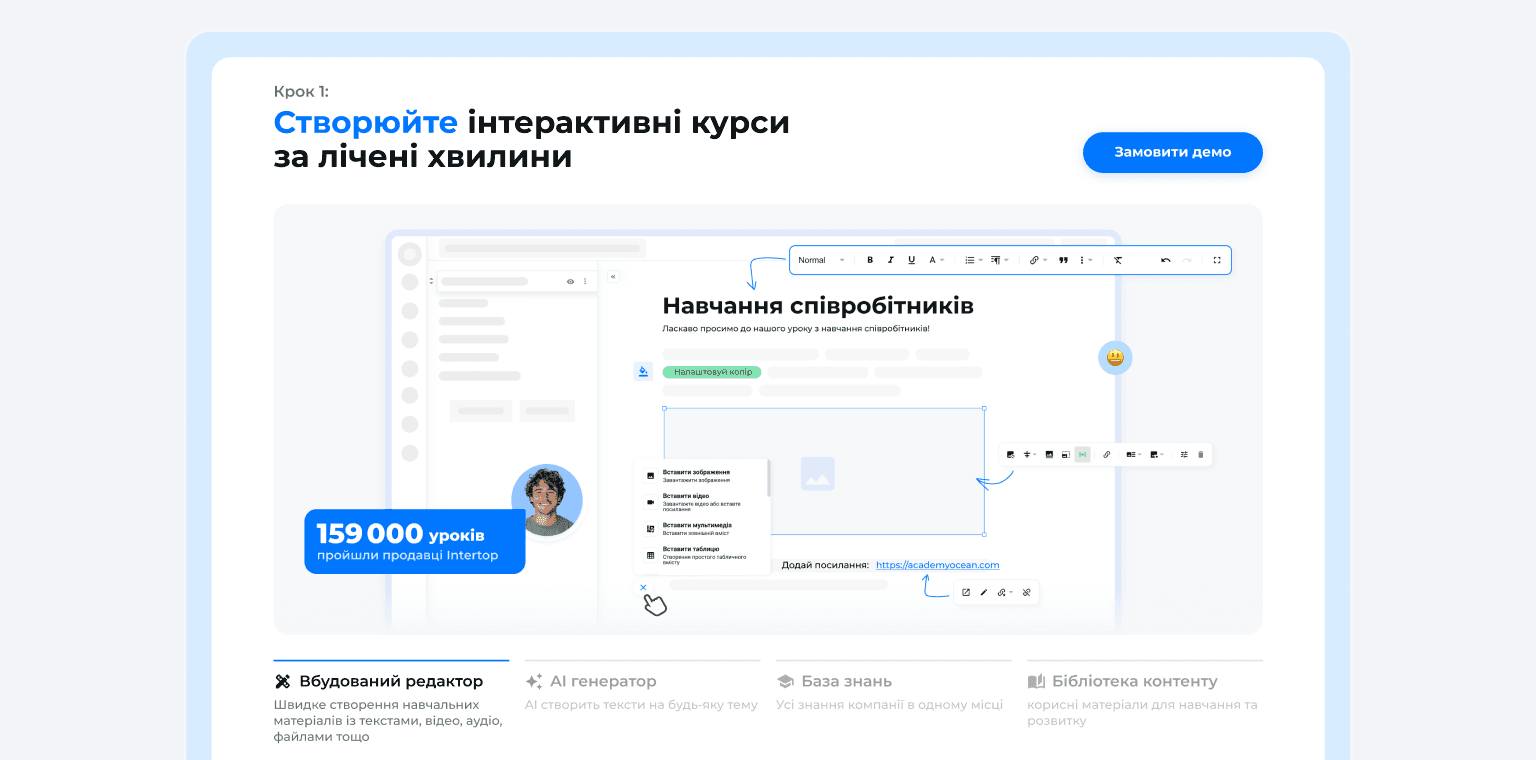
Step 1
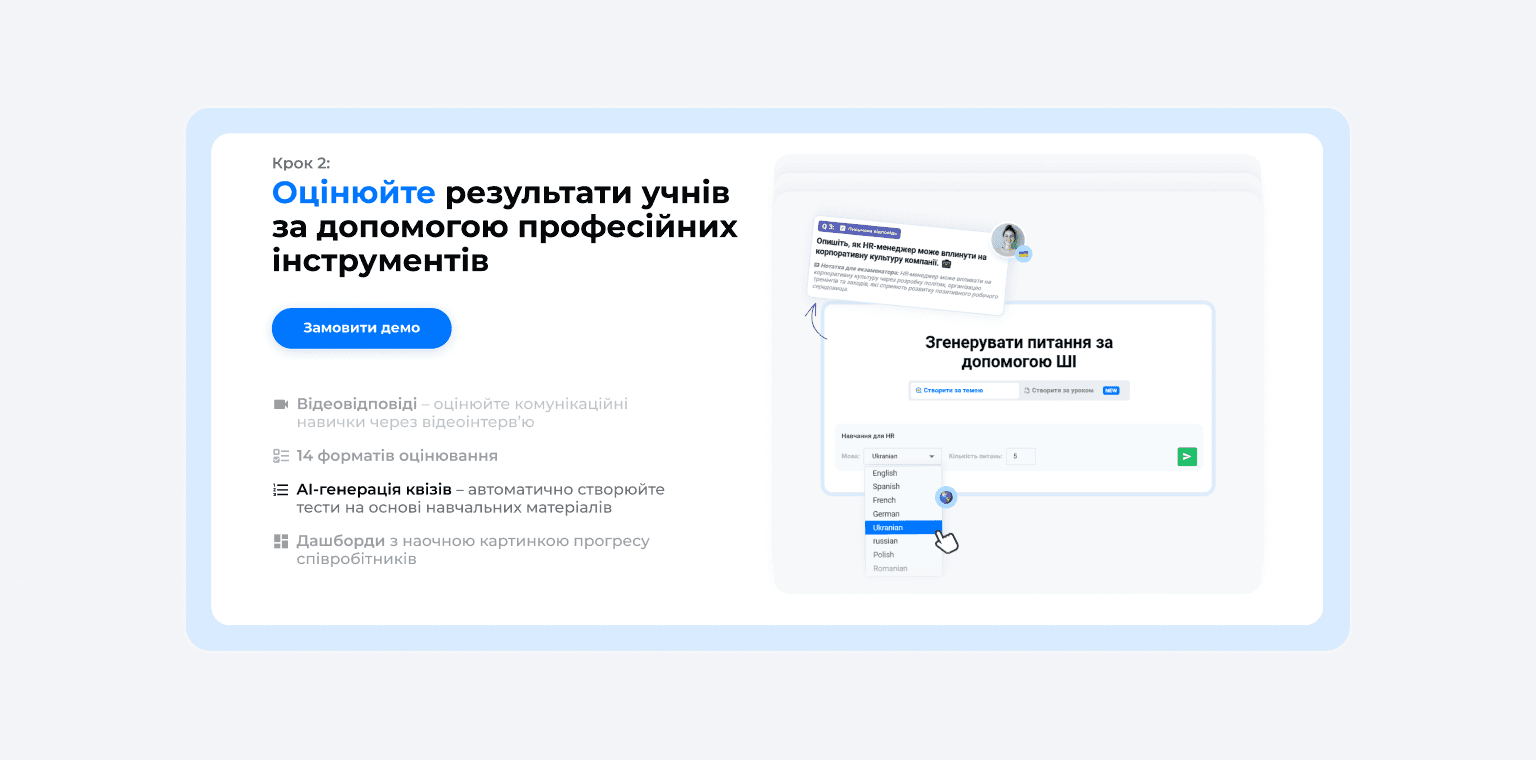
Step 2
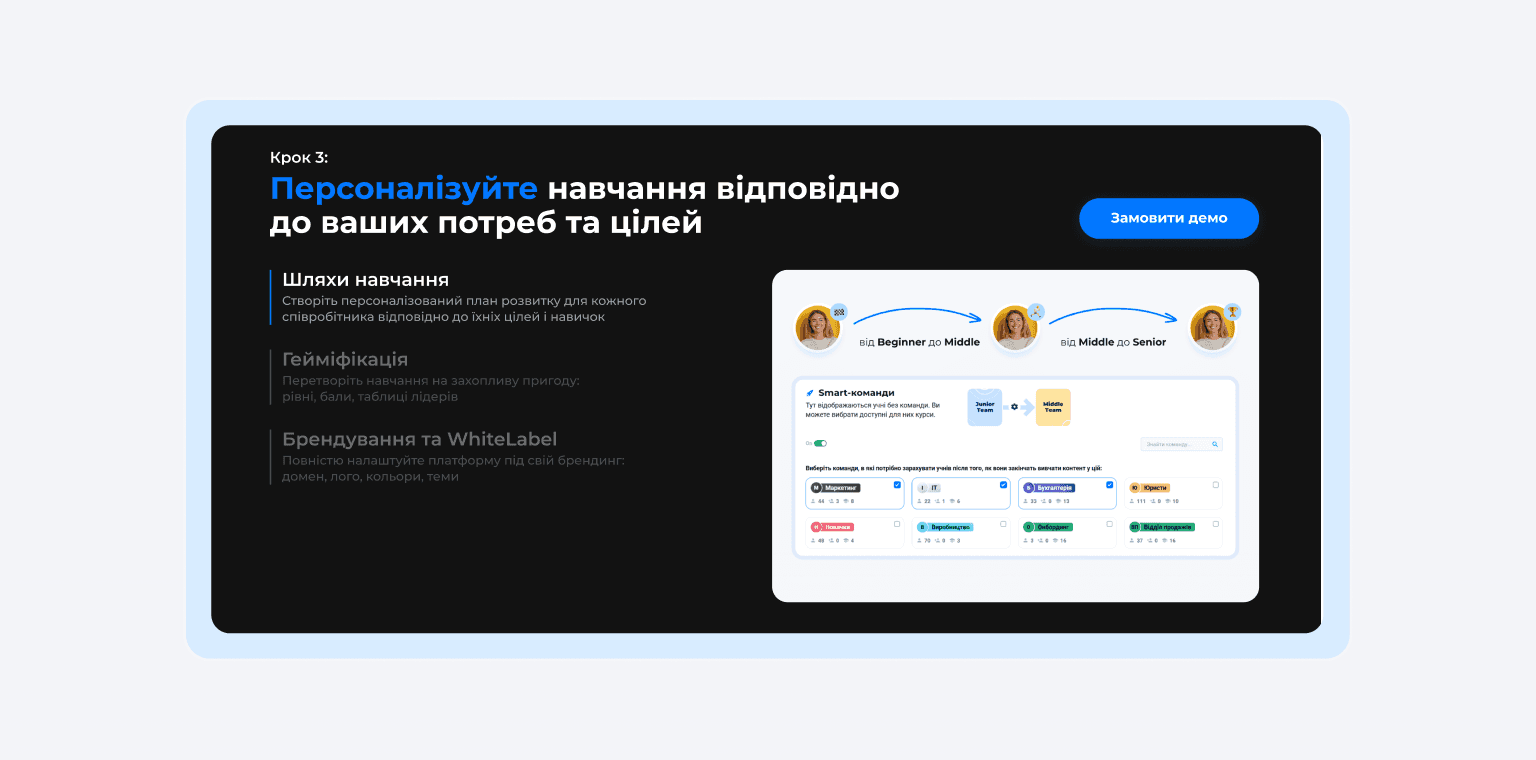
Step 3
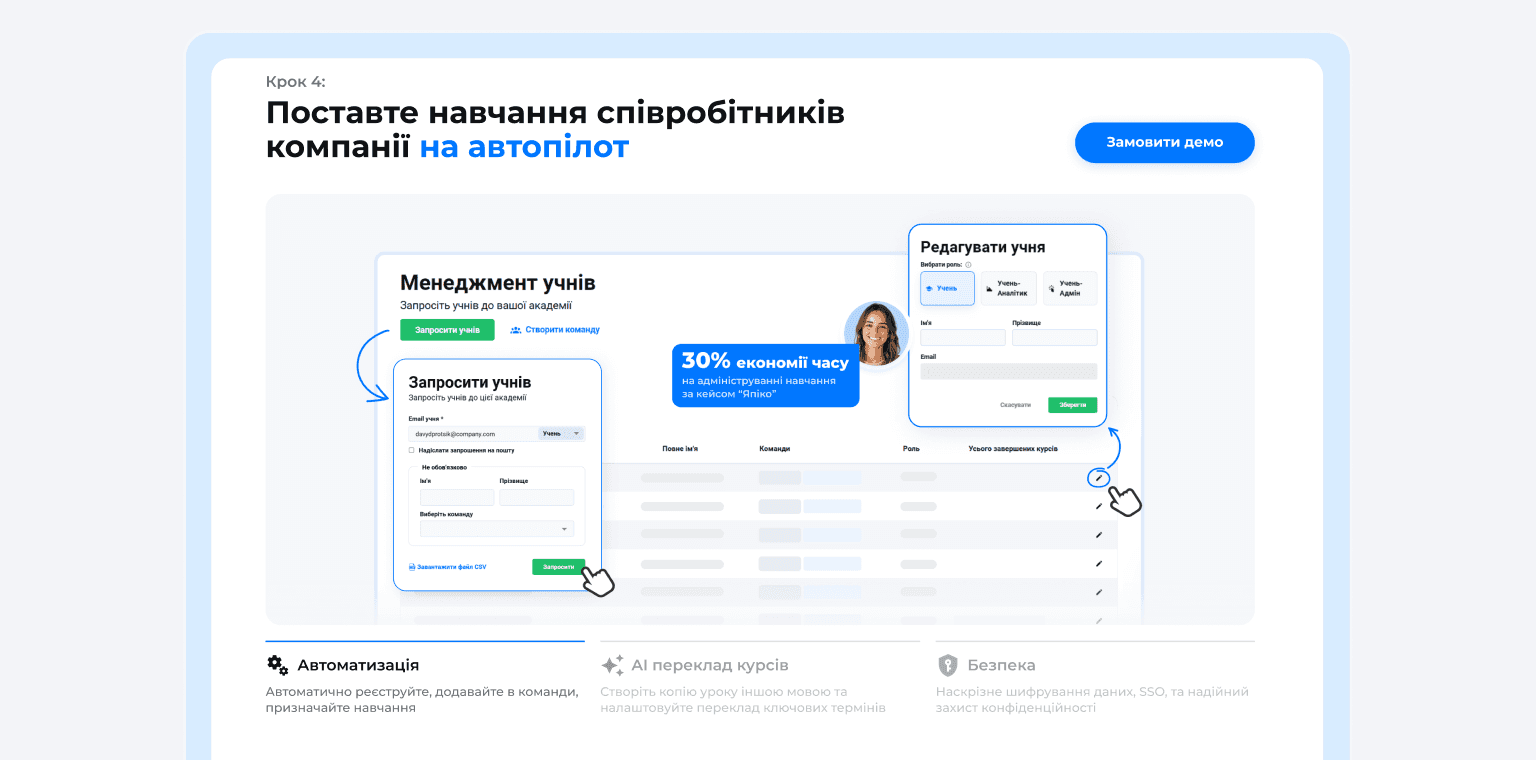
Step 4
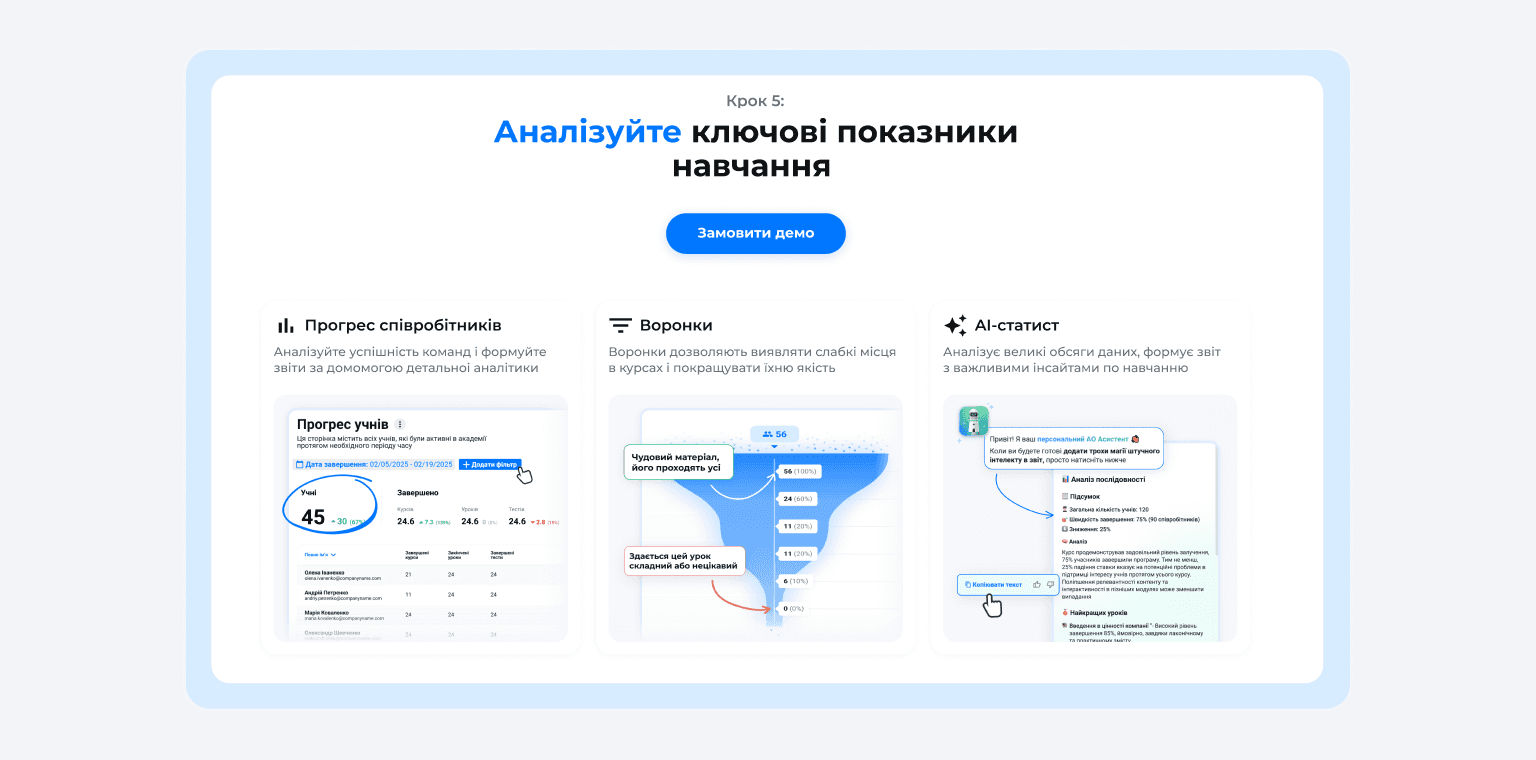
Step 5
Add more animated sections to make the website feel more dynamic
Integrations section
Adapt the design for smaller screens without sacrificing clarity or conversion
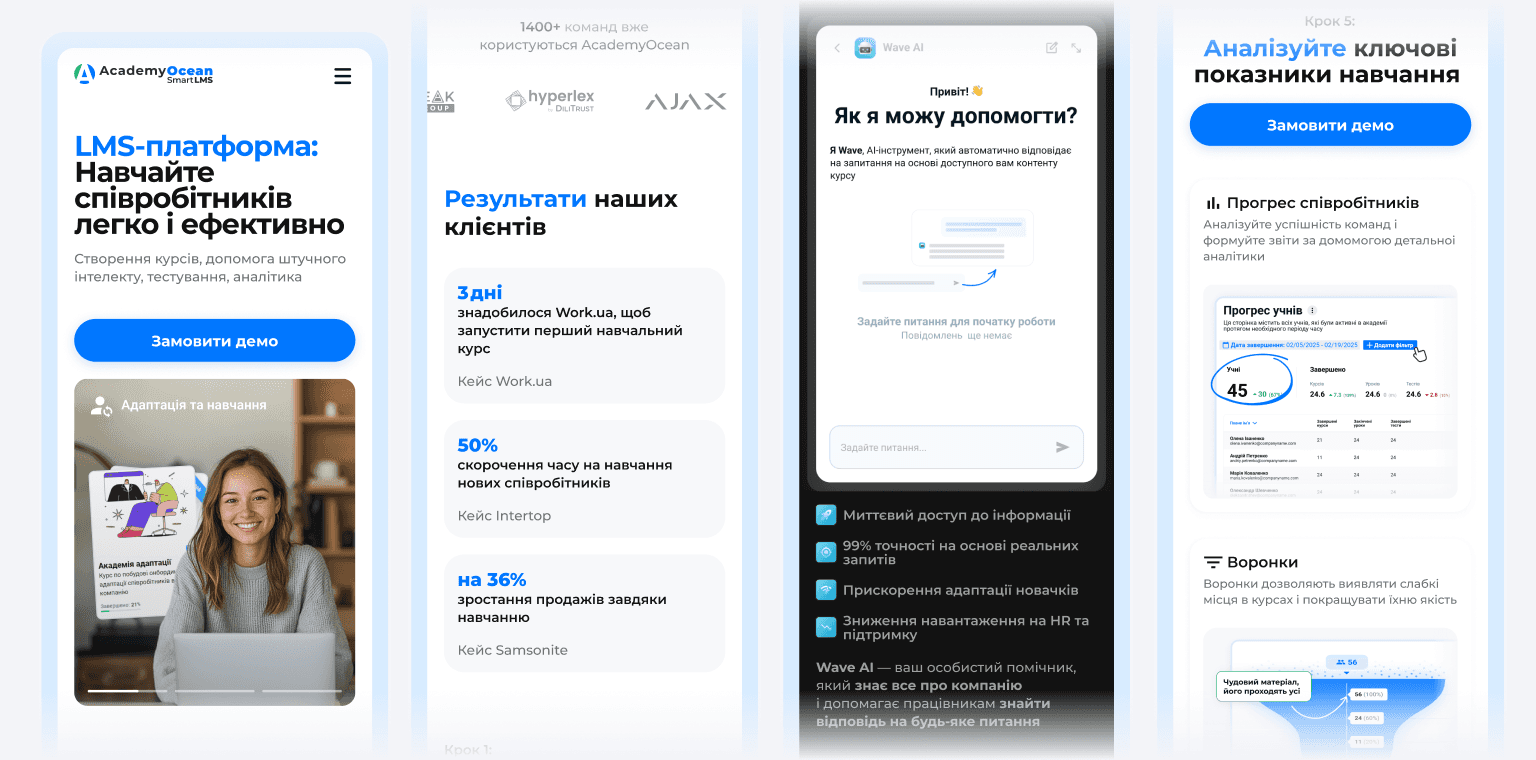
Mobile adaptation
First result

We increased the ‘Click Conversion’ by 4x
Redesign the “Book a Demo” page
After a few weeks, we reviewed the post-launch data and identified an opportunity to optimize the demo request form. We analyzed user behavior and key funnel metrics, then refined the page to improve completion rates and strengthen the end-to-end conversion path
Work stages
Research & validation
Conducted desk research for the “Book a Demo” page to understand user behavior and identify optimization opportunities
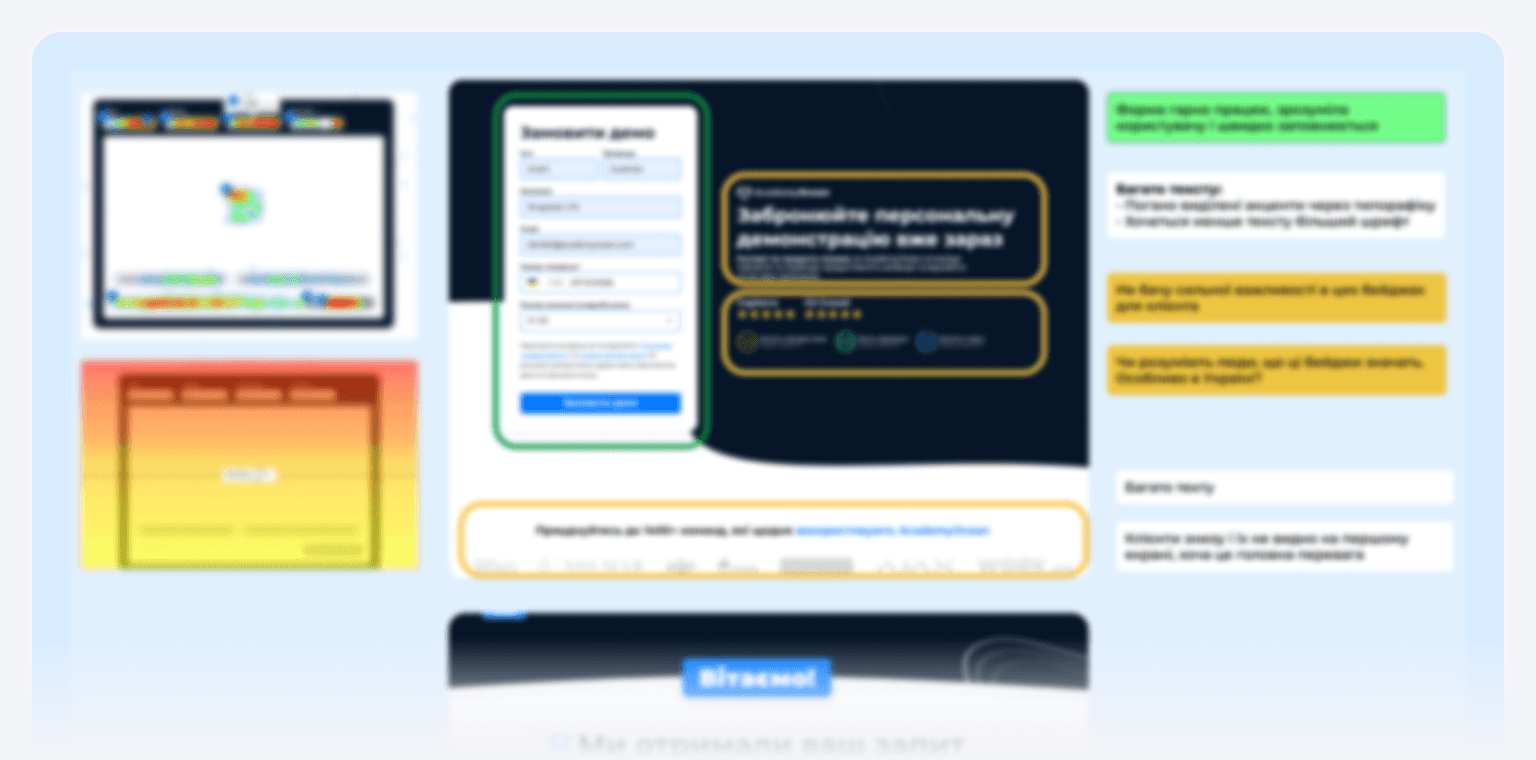
Reviewed Microsoft Clarity insights (Scroll Map, Click/Heat Map) to validate engagement patterns and interaction hotspots
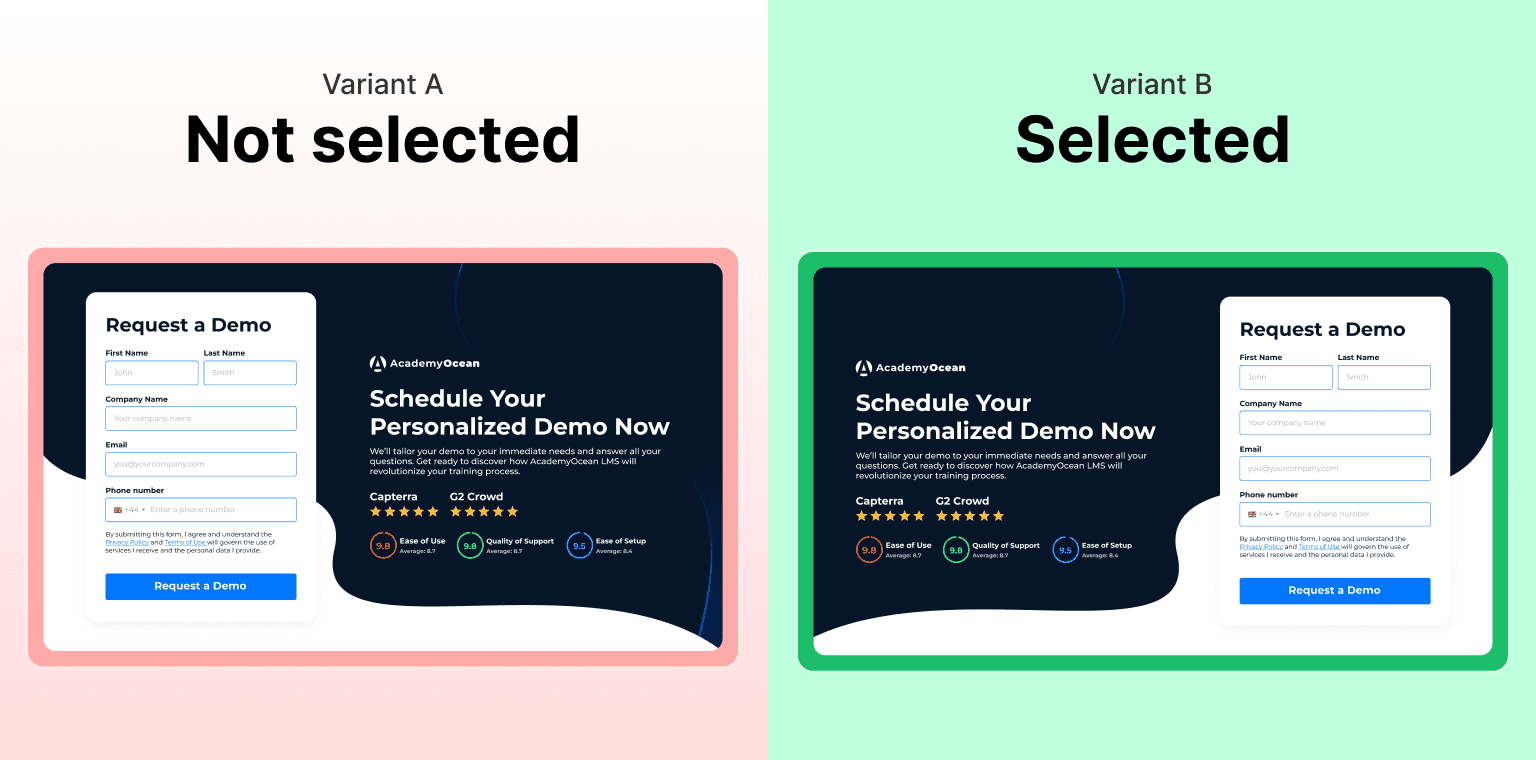
Ran an A/B test to compare form placement (left vs. right) and confirm the most effective layout
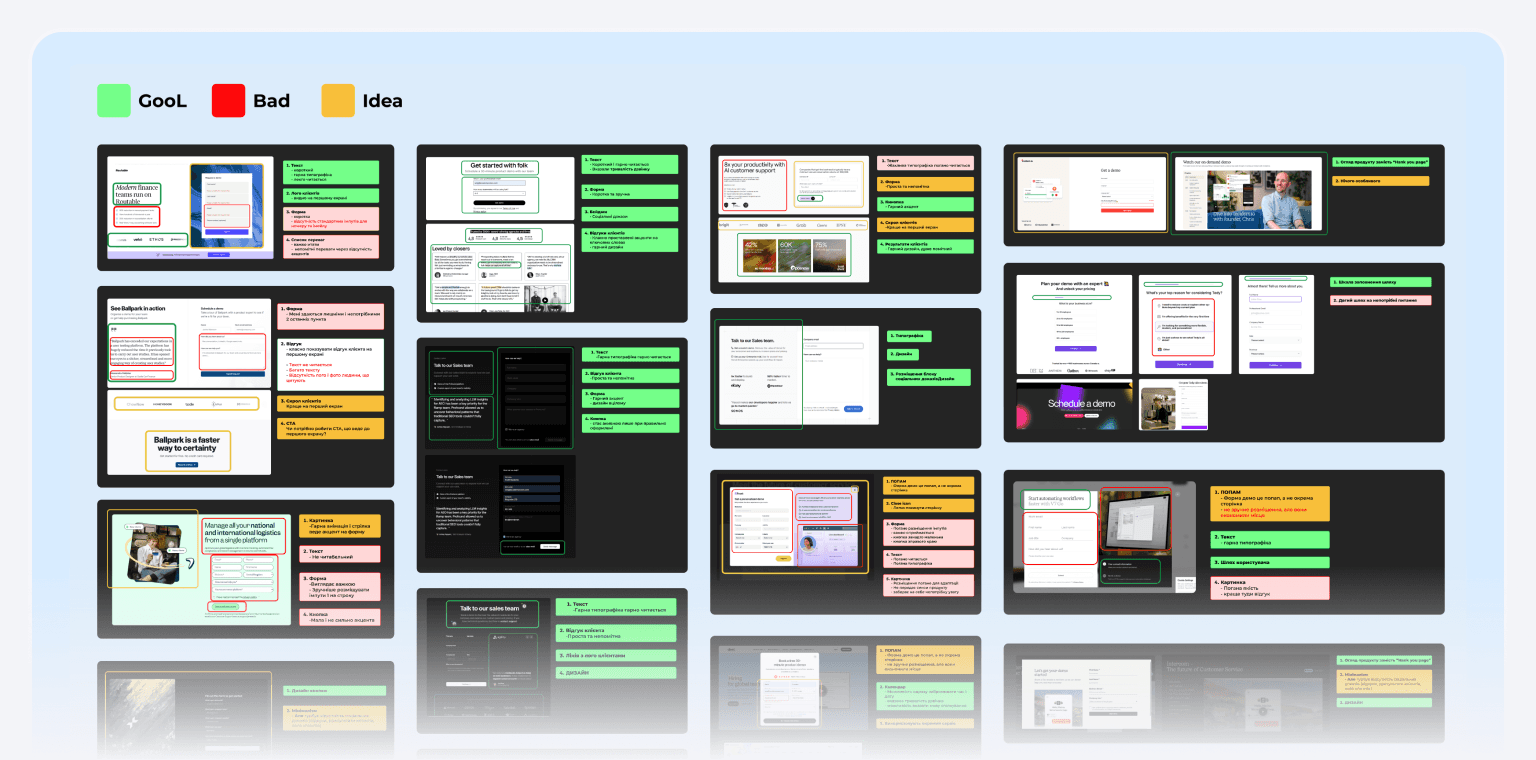
Analyzed competitor demo/lead-capture pages across B2B SaaS products to identify common patterns and best practices
I held a call with the team where I presented the design hypotheses, and we aligned on the most relevant ones to validate and implement
Demo request page prototyping
After we aligned on the selected hypotheses, I quickly drafted a prototype, synced the team on the direction, and then moved into designing the final demo request page
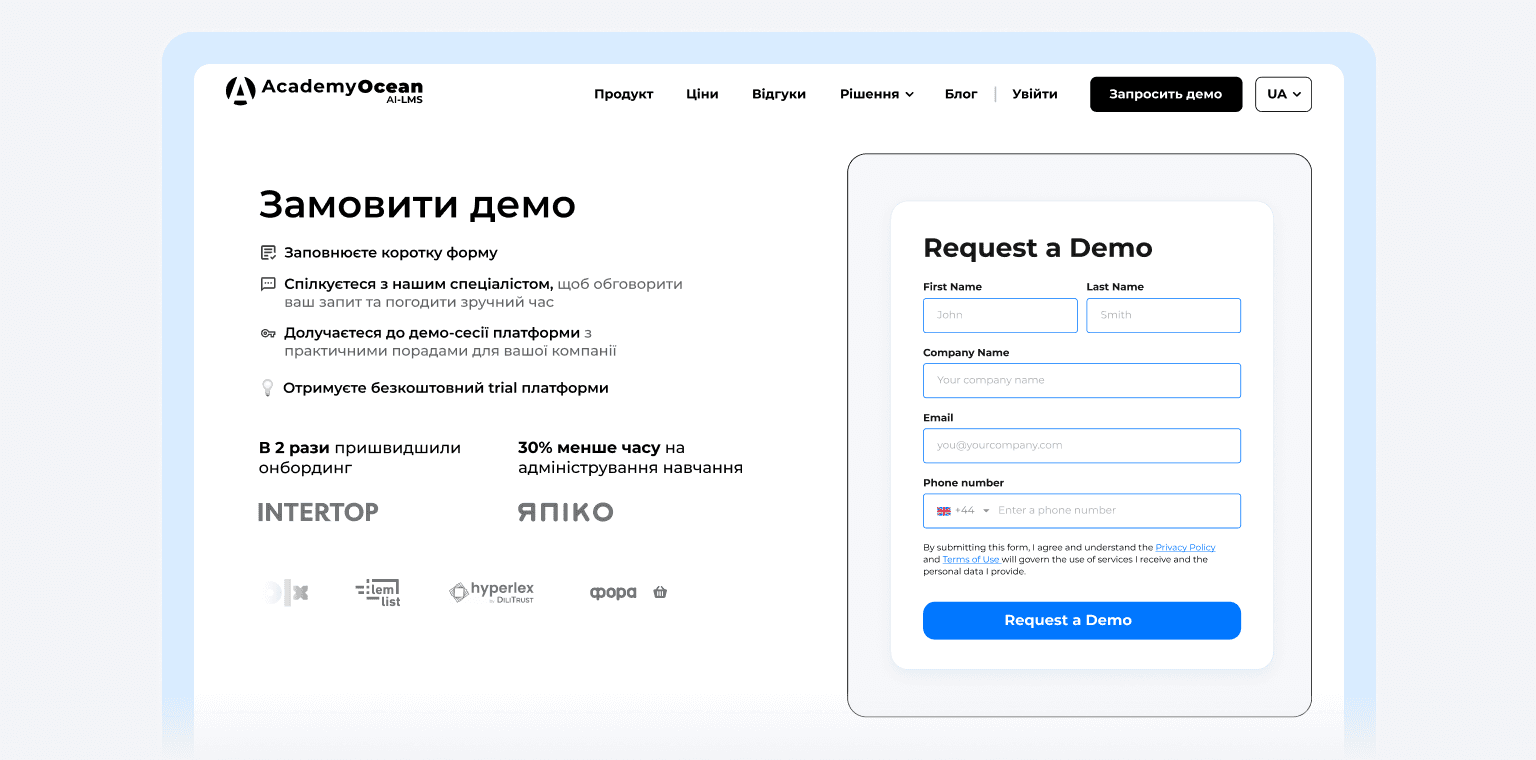
Prototype
Design
A key focus was to make form completion more interactive, add strong social proof, and clearly communicate what happens next after submission. At the same time, the page reinforced product value to further increase user confidence and interest
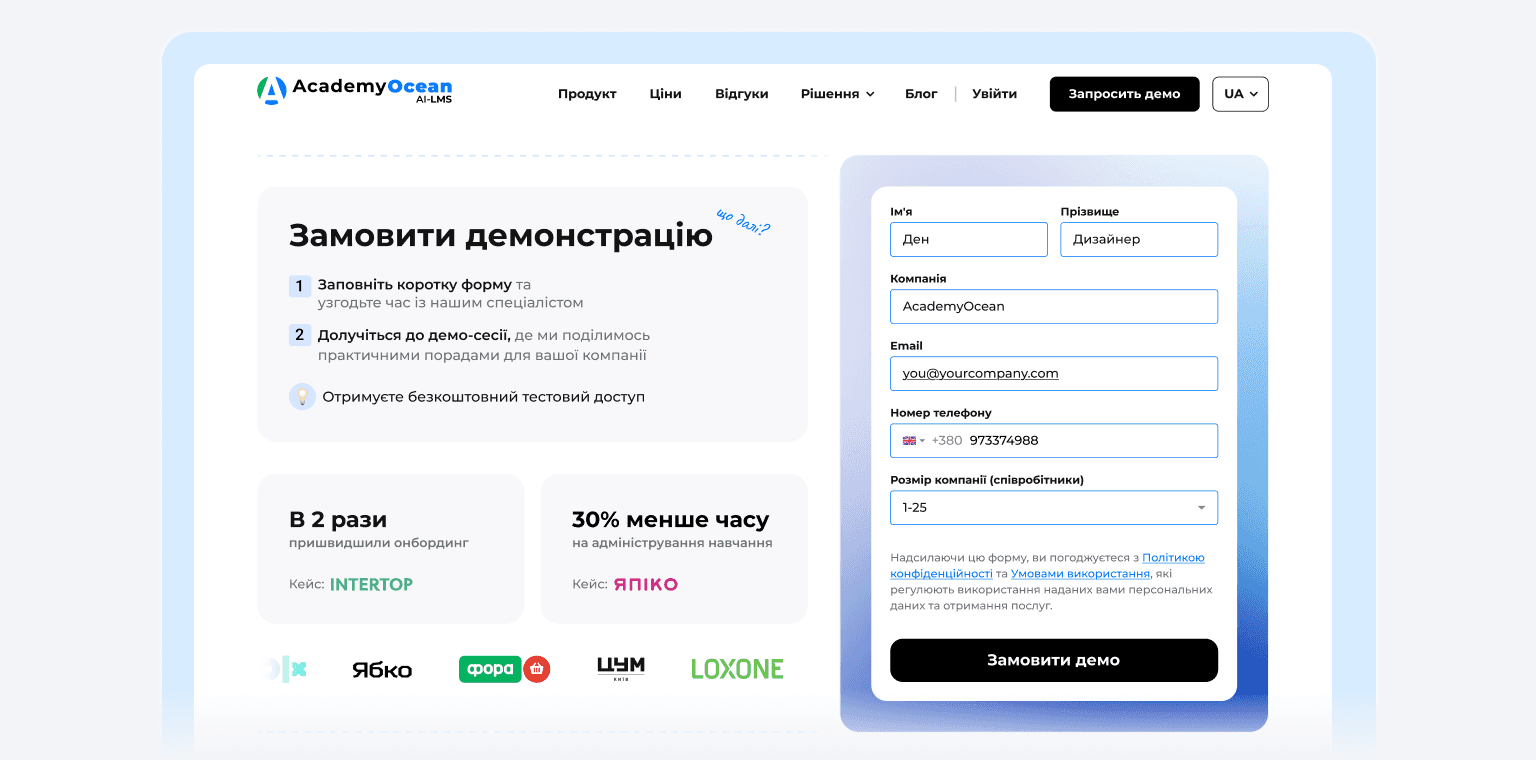
Based on the A/B test results, I kept the F-pattern reading flow and placed the demo request form on the right side of the page
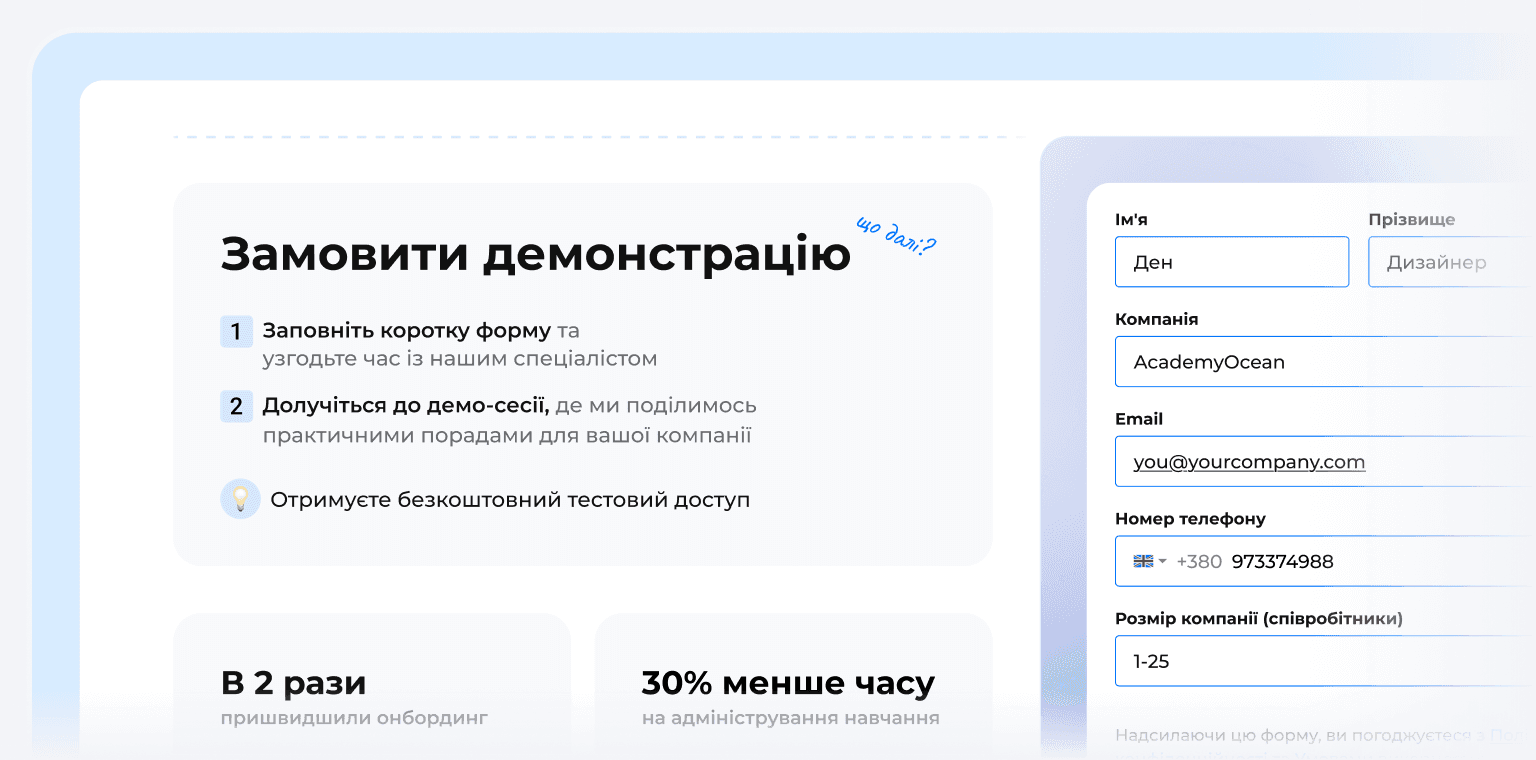
On the left side, I added a step-by-step guide so the customer would know what happens after requesting a demo
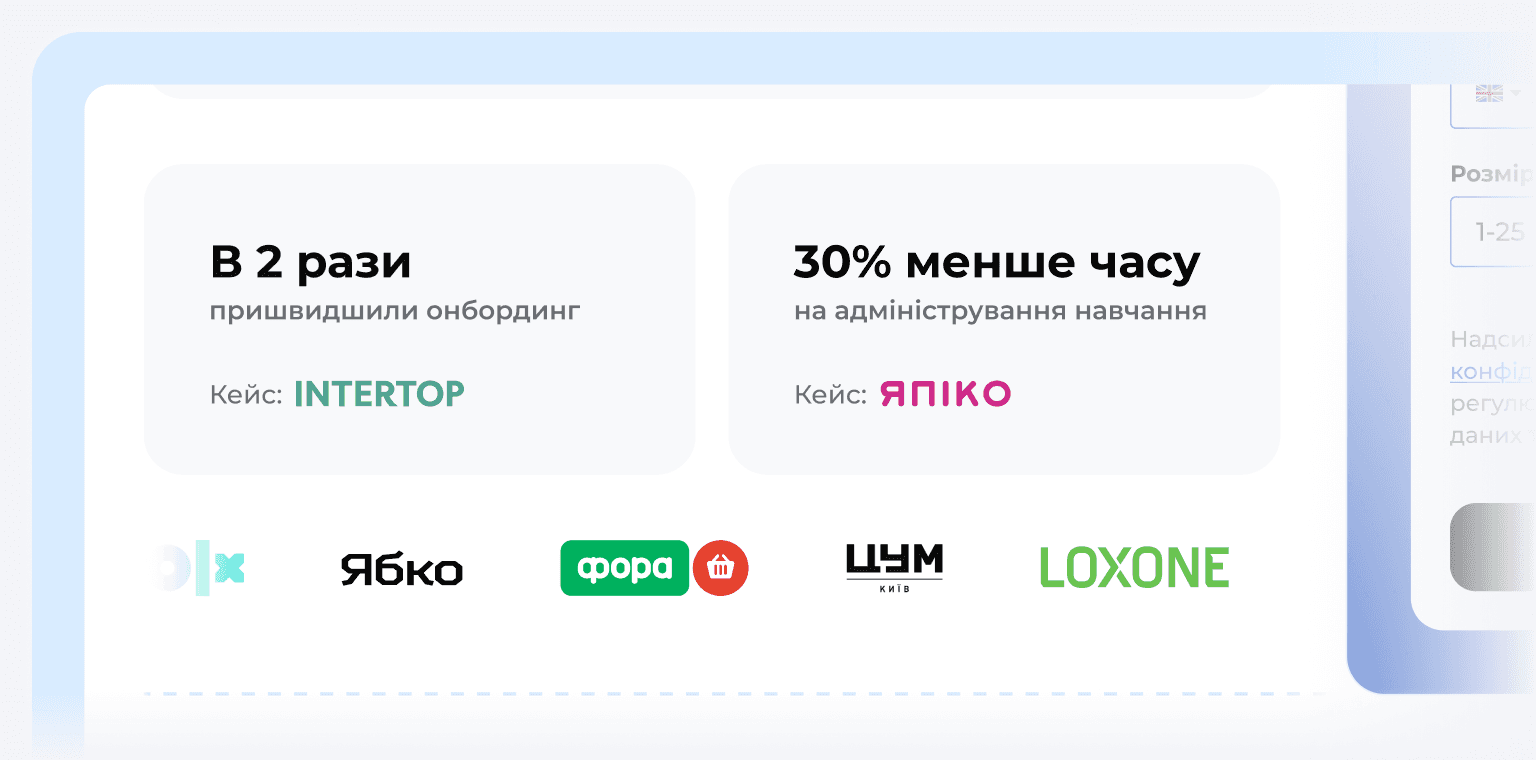
At the bottom, I added customer cases and logos to provide social proof
and confidence in the choice
We turned the form into a two-step flow to reduce perceived effort and increase completion. Users start with a short, low-friction first step, and only then see the remaining fields. By introducing complexity progressively—once users have already invested effort—we keep momentum and significantly lower the chance of drop-off
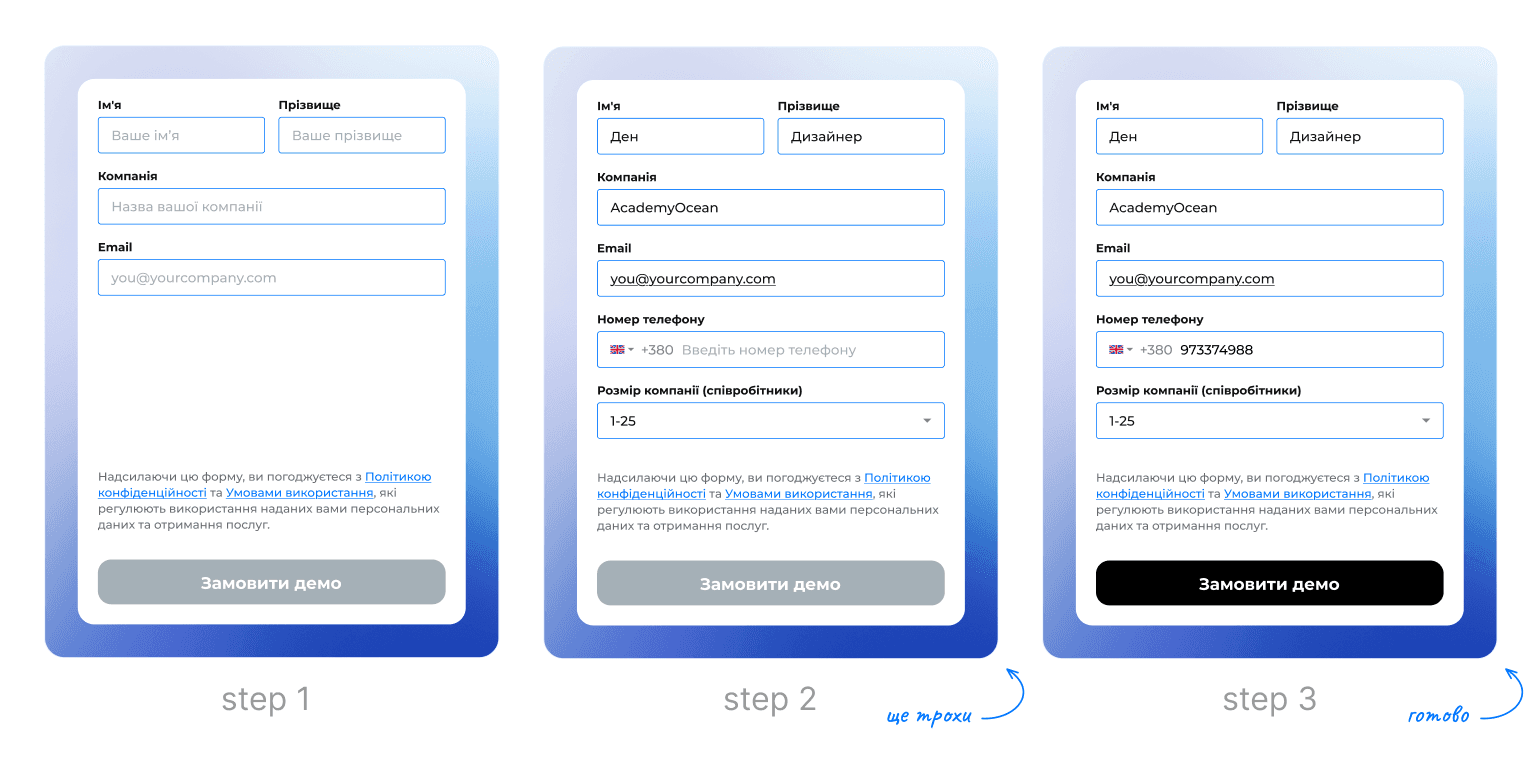
Form completion stages
Thank You page design
One of the key moments in the user journey is the Thank You page, and we intentionally avoided making it generic. Instead, we designed it as an interactive touchpoint that keeps users engaged, encourages them to stay on the site a bit longer, and explore the product
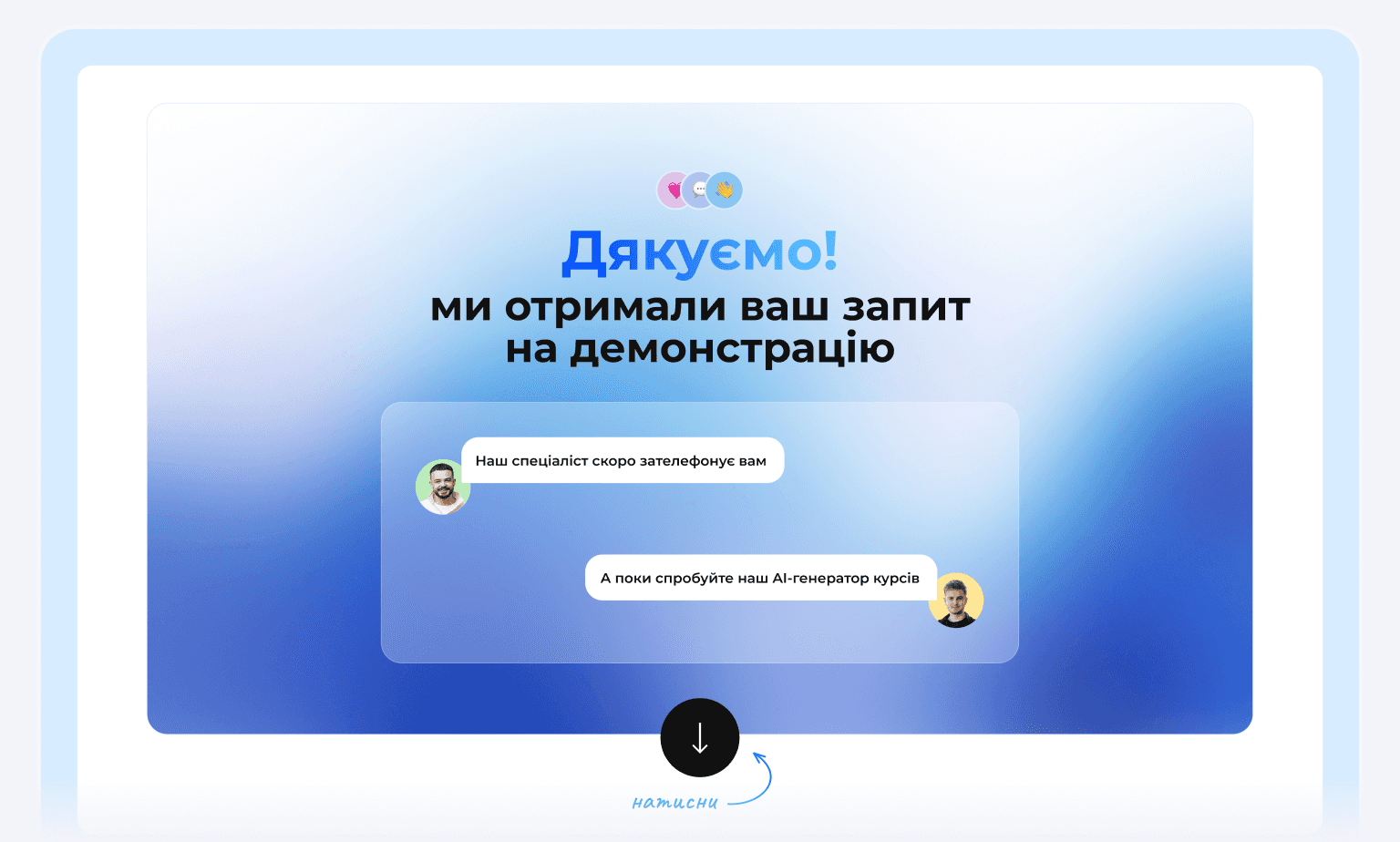
Thank You page
We added a dialog that clearly explains the next steps and invites users to stay on the page to try
the AI course generator
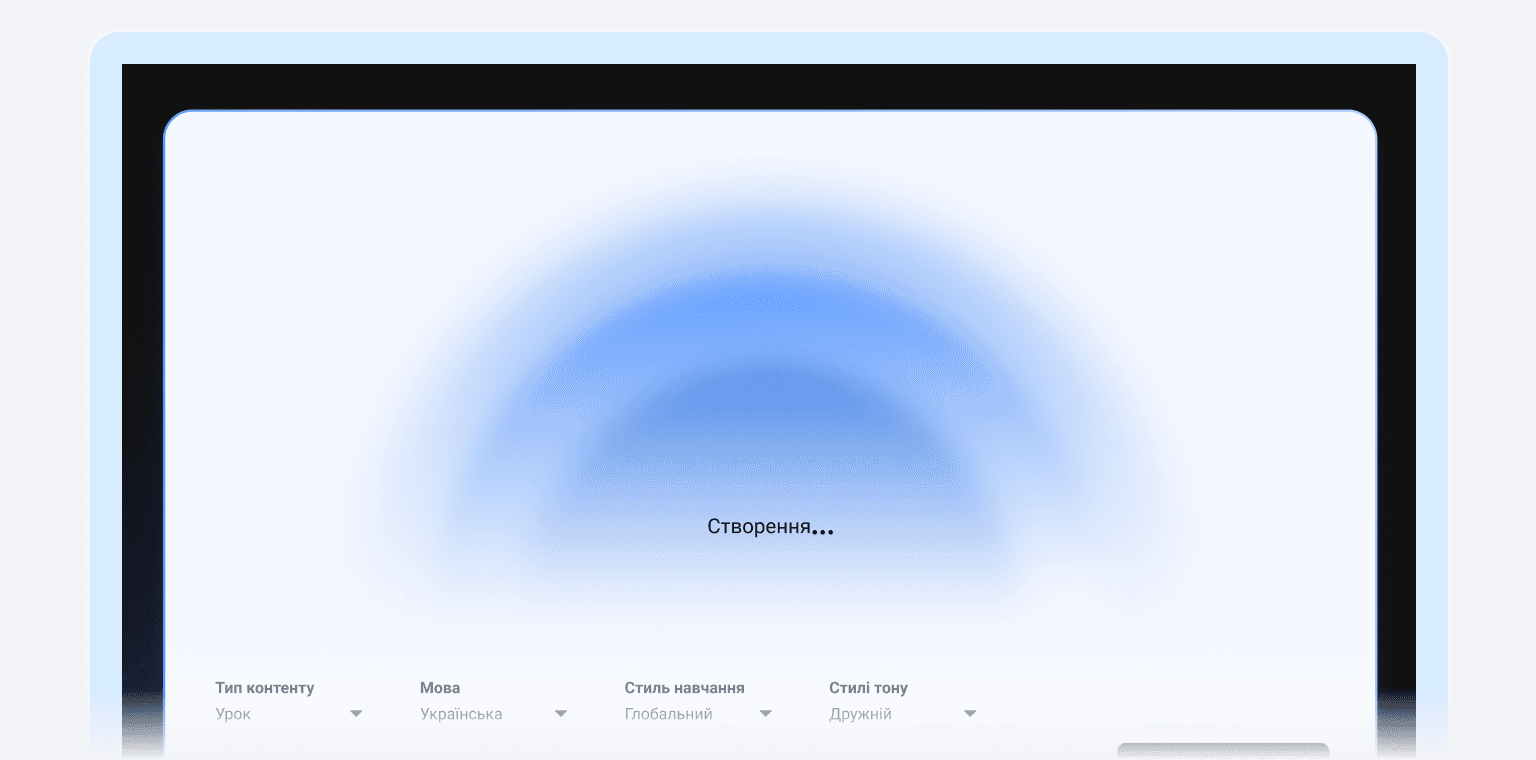
Loading screen
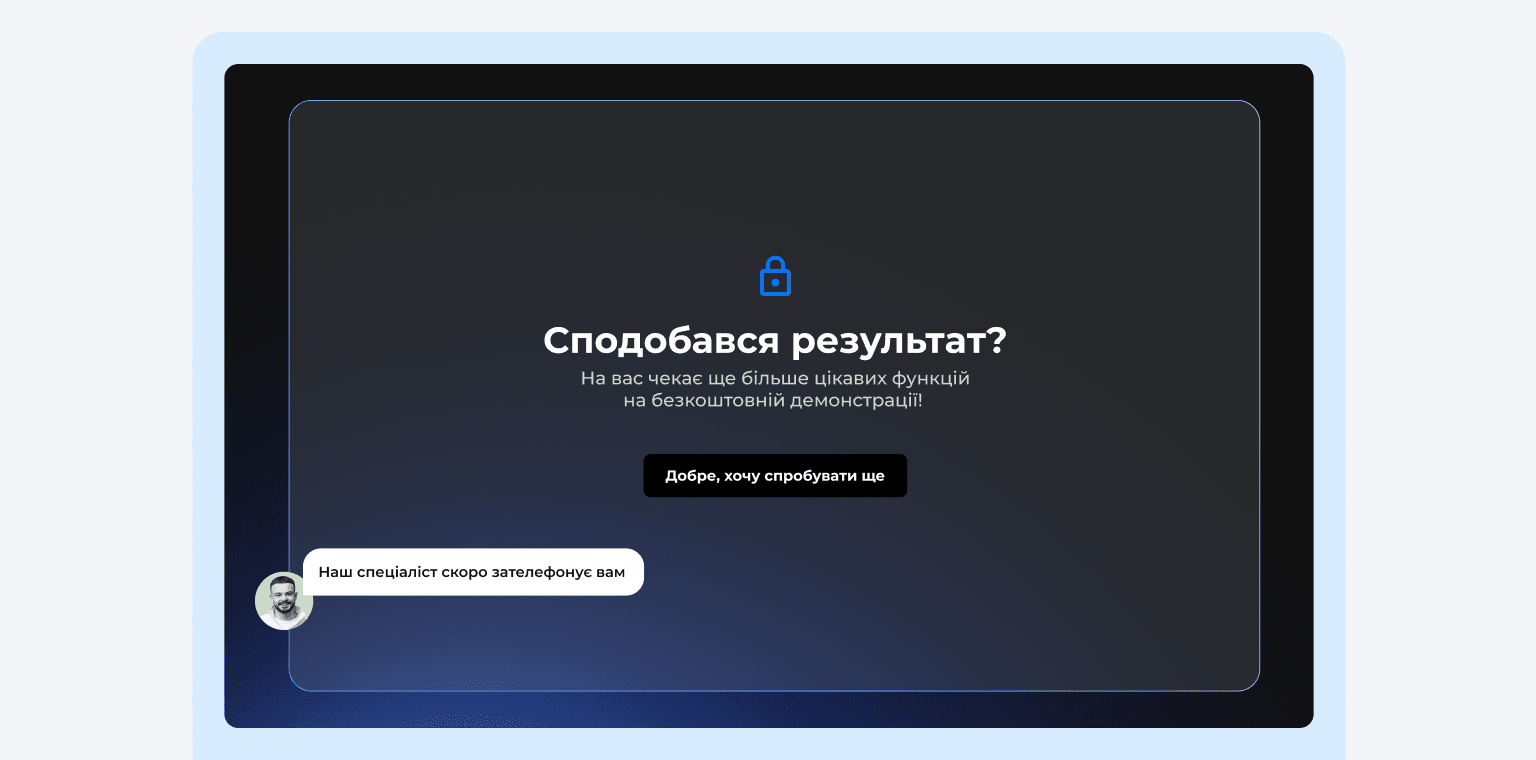
Locked screen (after 1st attempt)
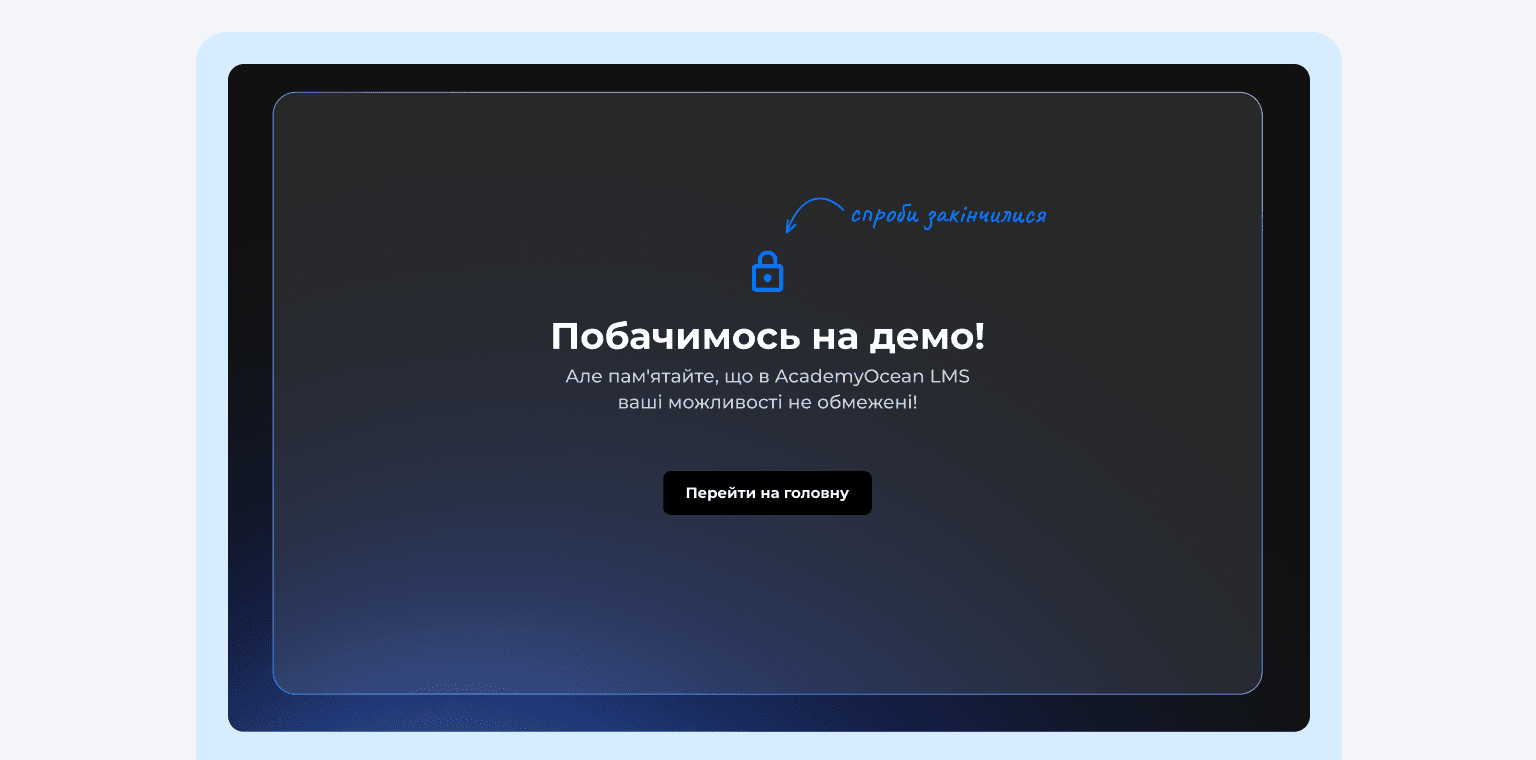
Locked screen (after 2nd attempt)
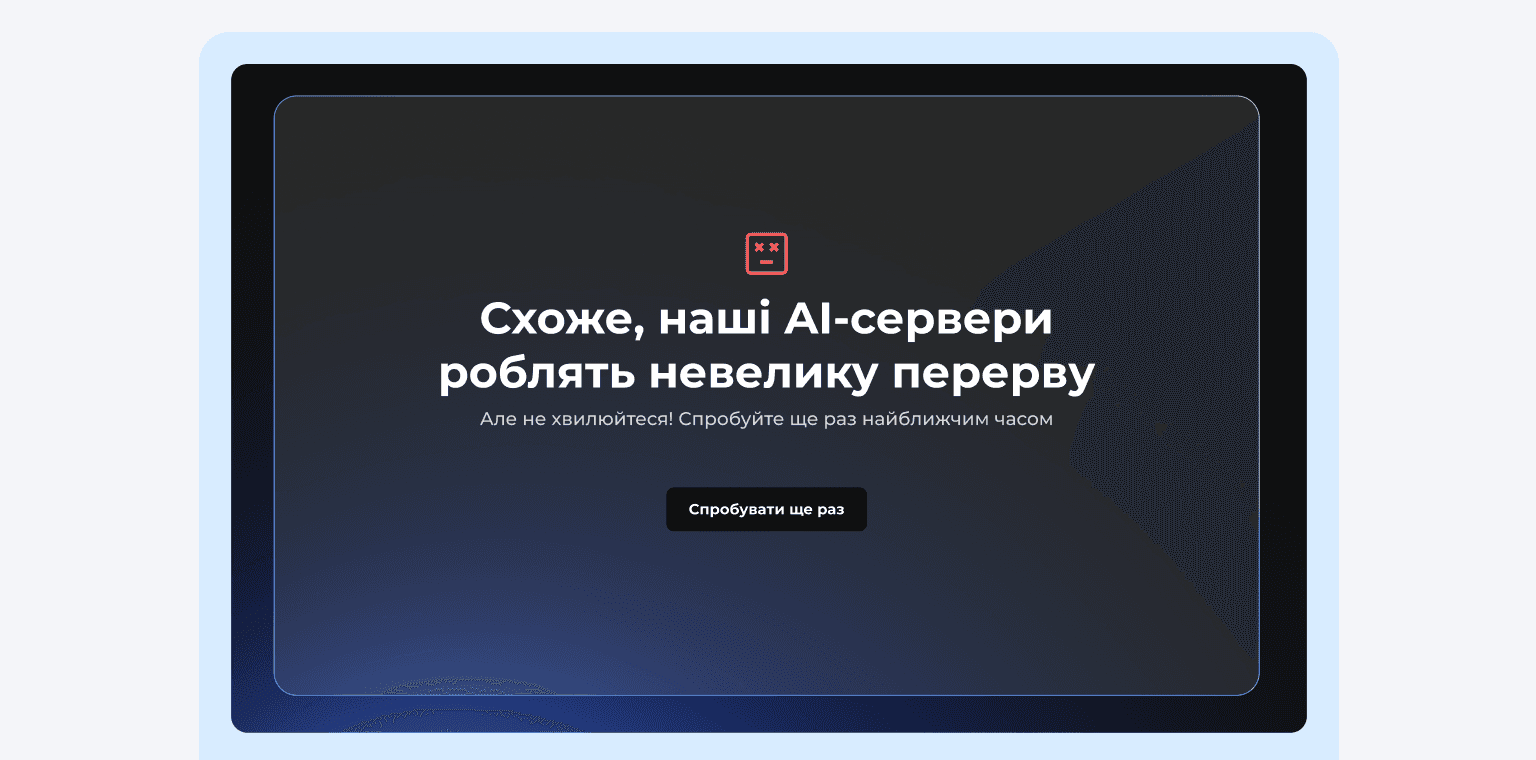
Error screen
Result
Increased demo request conversion by 3x
Redesign the Main page
What's been done
✅
We rebuilt the landing page around a clear value proposition, aligning new functionality to user pain points and reinforcing each section with social proof—driving an ~2x conversion lift
Context
The main goal was to redesign AcademyOcean’s homepage to better showcase the platform’s new functionality, clearly communicate the value and problems it solves, and build trust by adding customer testimonials throughout each section
Work stages
Research
I analyzed the previous version of the page in Microsoft Clarity using scroll maps, click maps, and session replays to understand how users interact with the existing design and what captures their attention throughout the scroll. Based on these insights, I formed recommendations to improve the page structure, navigation, and presentation of key sections
In parallel, I benchmarked B2B SaaS LMS competitors block-by-block
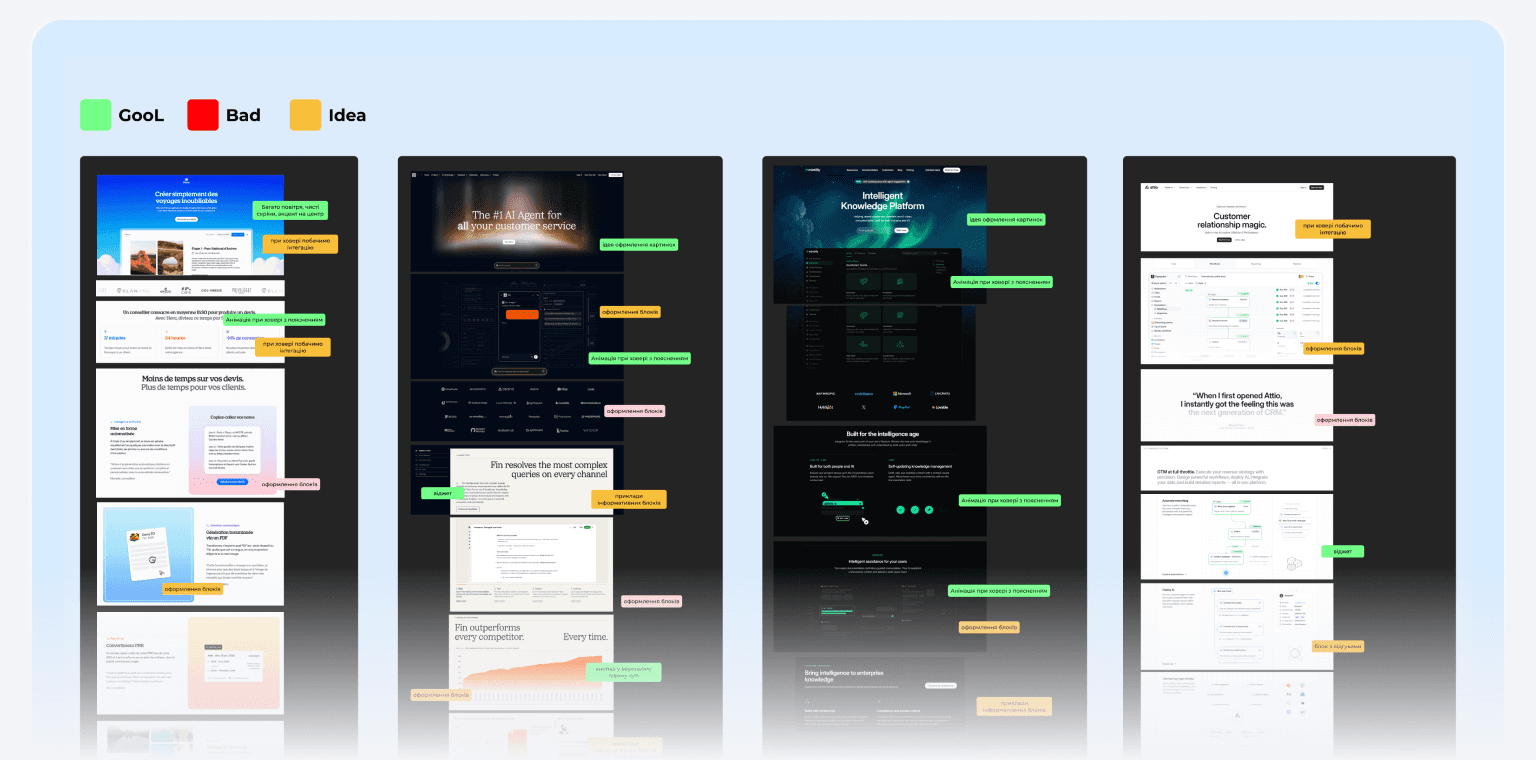
Moodboard and defined hypotheses
Design
AIDA-driven structure: designed the page around the AIDA model to systematically move users through the funnel: Attention (clear hero + core promise), Interest (benefit-led blocks and key capabilities), Desire (customer outcomes, testimonials, and proof points), and Action (repeated, well-timed CTAs)
Moodboard and defined hypotheses
Let’s work together
denfaltt@gmail.com
" height="24px" id="g5NlZ7OgS" width="24px"/><path d="M 7.999 1.466 C 10.132 1.466 10.398 1.466 11.265 1.533 C 13.464 1.6 14.464 2.666 14.531 4.799 C 14.598 5.666 14.598 5.866 14.598 7.999 C 14.598 10.132 14.598 10.398 14.531 11.198 C 14.464 13.331 13.398 14.398 11.265 14.464 C 10.398 14.531 10.198 14.531 7.999 14.531 C 5.866 14.531 5.599 14.531 4.799 14.464 C 2.6 14.398 1.6 13.331 1.533 11.198 C 1.466 10.332 1.466 10.132 1.466 7.999 C 1.466 5.866 1.466 5.599 1.533 4.799 C 1.6 2.666 2.666 1.6 4.799 1.533 C 5.599 1.466 5.866 1.466 7.999 1.466 Z M 7.999 0 C 5.799 0 5.532 0 4.733 0.067 C 1.8 0.2 0.2 1.8 0.067 4.733 C 0 5.532 0 5.799 0 7.999 C 0 10.198 0 10.465 0.067 11.265 C 0.2 14.198 1.8 15.798 4.733 15.931 C 5.532 15.997 5.799 15.997 7.999 15.997 C 10.198 15.997 10.465 15.997 11.265 15.931 C 14.198 15.798 15.798 14.198 15.931 11.265 C 15.998 10.465 15.998 10.198 15.998 7.999 C 15.998 5.799 15.998 5.532 15.931 4.733 C 15.798 1.8 14.198 0.2 11.265 0.067 C 10.465 0 10.198 0 7.999 0 Z M 7.999 3.866 C 5.732 3.866 3.866 5.732 3.866 7.999 C 3.866 10.265 5.732 12.131 7.999 12.131 C 10.265 12.131 12.131 10.265 12.131 7.999 C 12.131 5.732 10.265 3.866 7.999 3.866 Z M 7.999 10.665 C 6.532 10.665 5.332 9.465 5.332 7.999 C 5.332 6.532 6.532 5.332 7.999 5.332 C 9.465 5.332 10.665 6.532 10.665 7.999 C 10.665 9.465 9.465 10.665 7.999 10.665 Z M 12.265 2.8 C 11.732 2.8 11.332 3.2 11.332 3.733 C 11.332 4.266 11.732 4.666 12.265 4.666 C 12.798 4.666 13.198 4.266 13.198 3.733 C 13.198 3.2 12.798 2.8 12.265 2.8 Z" fill="rgb(255, 255, 255)" height="15.997499999999945px" id="FmKvmVHtw" transform="translate(4 4)" width="15.997500000000002px"/></svg>)